
Feeding the Future: How Local Video Can Strengthen Food Security
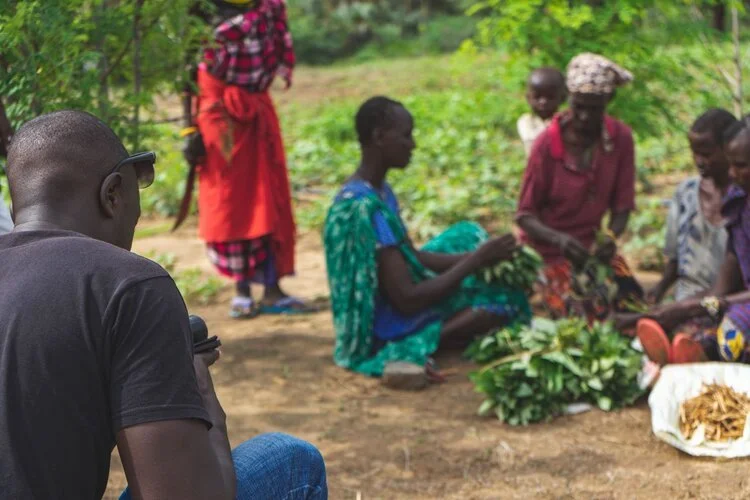
For millions of families around the world, food security means more than having enough to eat today. It means being able to grow, raise, or purchase nutritious food consistently, even as communities face rising prices, changing weather, and limited resources.
While conflict, climate change, and poverty are major causes of hunger, another barrier receives less attention: access to practical information.
Smallholder farmers need clear guidance on topics such as soil health, water management, animal care, crop diseases, food storage, and selling their products. But agricultural specialists cannot visit every community. Printed materials may be difficult to understand, and internet access is often limited or unaffordable.
Locally made video offers another way to share this knowledge.
In western Kenya, illuminAid is working with WorldFish to support smallholder fish farmers through the Climate-Resilient Aquaculture Systems for Africa project.
Fish farming can provide families with both nutritious food and income. However, maintaining a productive pond requires farmers to make informed decisions about feeding, water quality, fish health, stocking, and pond management.
Through illuminAid’s Video Education Workshop, local participants learned how to plan, film, and edit short educational videos for farming communities. The videos cover practical topics including pond establishment, fish feeding, fingerling selection, water quality, production management, and preparing fish products for sale.
What makes these videos useful is not only the information they contain. It is how that information is presented.
Farmers see familiar landscapes, hear local languages, and watch techniques demonstrated under conditions similar to their own. The people appearing on screen may be farmers, trainers, or specialists already known within the community.
Instead of being passive recipients of information, local people become educators.
Community screenings also create opportunities for discussion. A facilitator can pause the video, answer questions, and help farmers consider how a technique might work with their available land, water, labor, and budget.
This matters because food security rarely improves through information alone. New practices must feel realistic, affordable, and relevant enough for families to use.
Video also allows useful knowledge to travel farther.
A demonstration given once by an agricultural specialist can be recorded and shown repeatedly. It can reach farmers who could not attend the original training and be screened again when a new farming season begins.
Using portable projectors and solar-recharging equipment, communities can hold screenings even where electricity and internet access are limited. The same equipment can later be used to create new lessons as local needs change.
Over time, communities can build their own libraries of agricultural knowledge. Videos might address water conservation, crop protection, soil restoration, livestock care, household nutrition, or reducing food losses after harvest.
Local video does not replace agricultural specialists or hands-on training. It helps their knowledge remain available longer and reach more people.
Food insecurity is a global challenge, but many of the decisions that shape it happen locally. They happen when a farmer decides how to prepare a field, feed fish, protect a harvest, or try a new method.
Those decisions depend on information that people can understand, trust, and apply.
Sometimes, meaningful change begins with one farmer watching another and realizing, “I could do that too.”