
Community-led video as a catalyst for ending gender-based violence in Tanzania
Violence against women and girls remains one of the most widespread human rights violations globally. An estimated one in three women will experience physical or sexual violence in her lifetime, with devastating consequences for health, dignity, security and autonomy. In Tanzania, as in many contexts, gender-based violence (GBV) persists despite strong national commitments, often compounded by limited access to information, justice and survivor-centered services — particularly at the community level.
This is where community-led communication becomes a powerful complement to institutional responses.
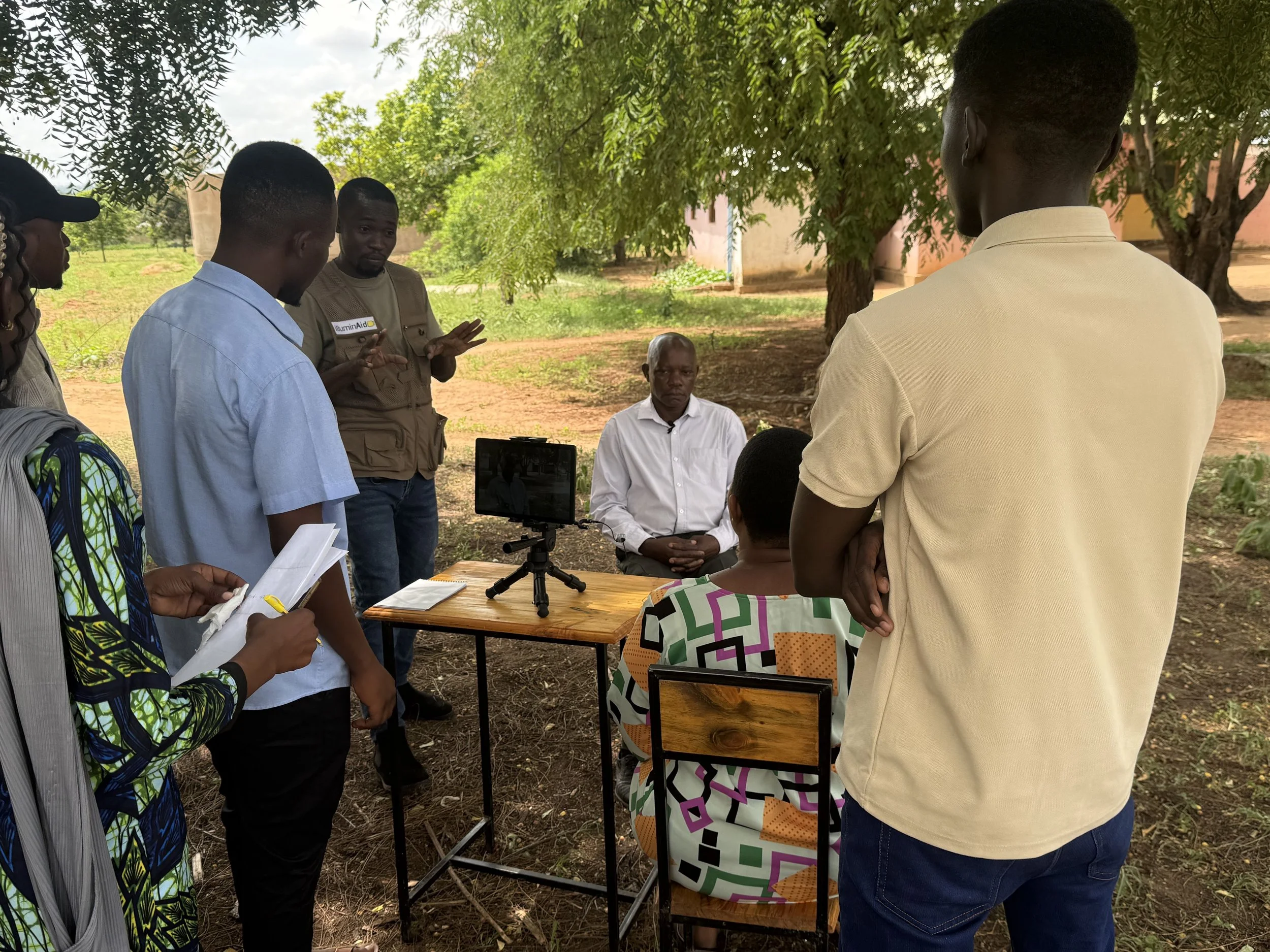
In partnership with the German Agency For International Cooperation (GIZ) Tanzania, illuminAid is participating in a new initiative to strengthen access to justice and reduce GBV by equipping community-based paralegals with participatory video tools and skills. The project begins with a four-day Video Education Workshop in Dodoma, bringing together ten paralegals from five local legal aid organizations across Dar es Salaam, Dodoma and Tanga, alongside youth representatives from Women and Youth Tanzania (WOYOTA).
During the workshop, participants will co-create short, locally resonant video stories addressing GBV, legal rights and pathways to support. Using mobile, solar-powered video kits, paralegals will learn how to produce and facilitate community screenings that spark dialogue, challenge harmful norms and encourage uptake of existing services, such as legal aid, health care and psychosocial support. Importantly, the process emphasizes ethical storytelling, survivor safety and community ownership.
Following the training, illuminAid will provide one year of technical and financial accompaniment as paralegals lead screenings and discussions within their communities. This grassroots approach is designed to reinforce national GBV frameworks by translating policies, laws and services into lived understanding — through stories created by trusted local actors, in local languages and grounded in real community contexts.
For NGOs working in GBV prevention, justice, health, youth engagement or humanitarian response, this model offers a scalable, low-cost way to strengthen community-level impact while aligning with national systems and UN-led priorities. Ending GBV requires both strong institutions and informed and empowered communities. Meaningful change happens when the two work together.