
Returning to Kenya: Advancing Climate-Resilient Aquaculture Systems for Africa (CASA)
This fall, illuminAid is headed back to Kenya to continue a project that started with a complex question: how do you help smallholder fish farmers learn new climate-friendly practices and empower women working in the aquaculture value chain? The answer, developed with our partners at WorldFish and other participating organizations in the CASA consortium, has been video — and the results of that first phase are now complete.
What We've Built So Far
illuminAid’s role in the CASA video initiative began in November 2025 with a multi-day Video Education Working Session in Nairobi, where illuminAid convened 14 participants from WorldFish, Farm Africa, AWFBEK, KMFRI, Mediae/iShamba, and other aquaculture stakeholders. Rather than arriving with a pre-set curriculum, the workshop was designed to build the content from the ground up: participants mapped the aquaculture value chain together, debated which learning gaps mattered most to farmers (with input from farmers themselves), and worked through illuminAid's approach to participatory, behavior-change-oriented video production — storytelling, scriptwriting, storyboarding, and the basics of shooting in the field. Out of that collaborative process came 18 candidate video topics, narrowed down to the ten priority subjects that would anchor the final series.
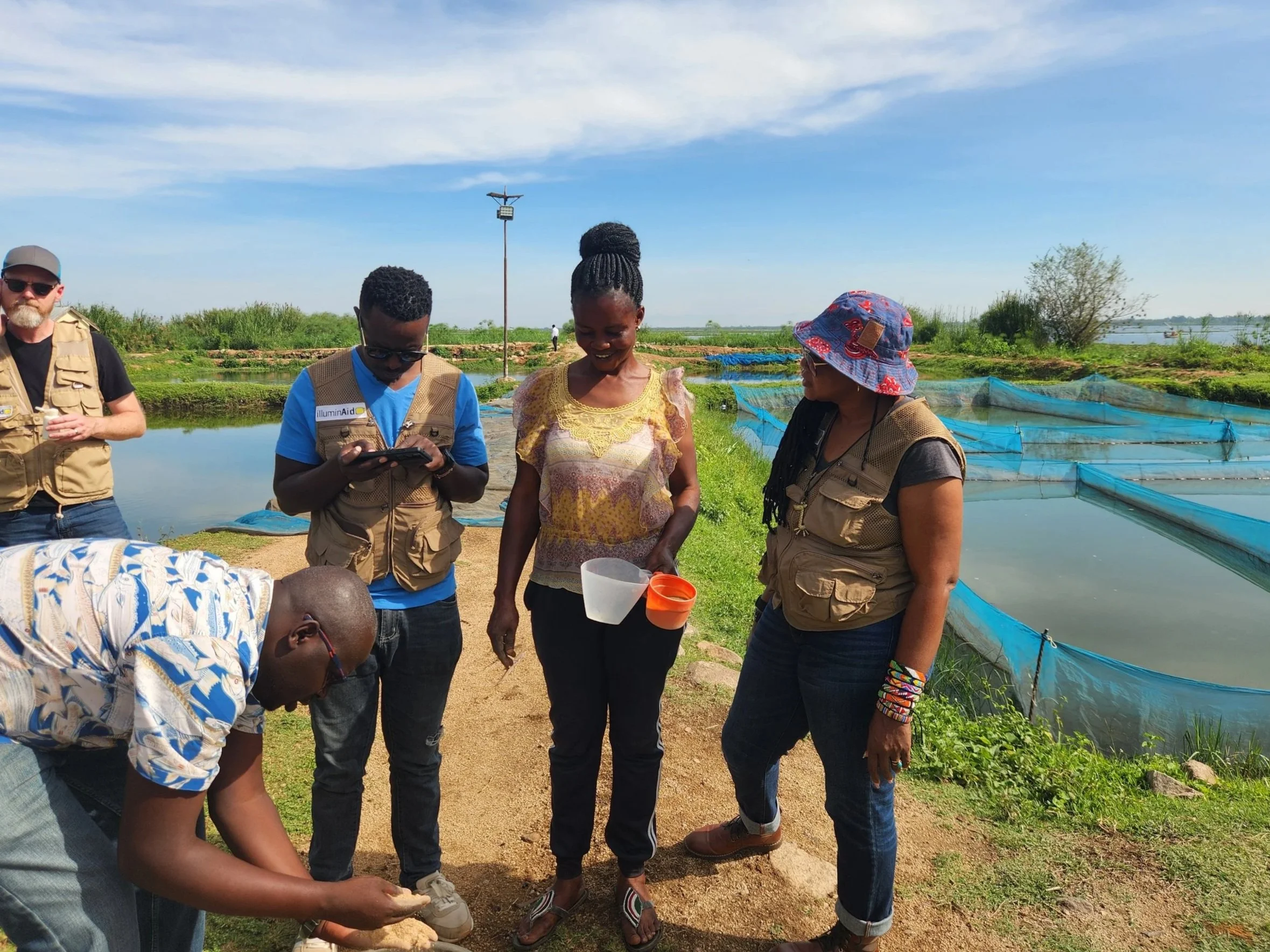
From there, the work moved out of the conference room and into the field. Over three days in Homa Bay and Kisii counties, illuminAid and WorldFish staff worked directly with farmers, traders, hatchery operators, and aquaculture officers to gather interviews, demonstrations, and observational footage — pond construction, stocking, feeding, fertilization, harvesting, post-harvest handling, record keeping, and the role of women and youth across the value chain. The goal wasn't stock footage of "best practices." It was footage of real people, on real ponds, describing what actually works and what doesn't.
That fieldwork carried a second purpose alongside content collection: capacity building. Two WorldFish staff members, Kenneth Amuti and Danyell Odhiambo, joined as "Video Champions," getting hands-on experience with interviewing technique, camera and equipment use, b-roll collection, and identifying strong stories as they emerged. This wasn't incidental to the production — it was one of the project’s most important deliverables, built on the premise that the videos would ultimately need to be maintained and expanded by people embedded in the local project, not illuminAid’s US-based team.
The months since have been spent turning that raw material into finished content: reviewing and organizing footage, cutting rough versions, running them through review cycles with WorldFish and CASA technical staff, refining audio and visuals, and subtitling. The result is now complete — 50 total video assets, comprising 10 training videos, each produced in five language versions (English, Swahili, Luo, Luhya, and Kisii) so the same core content can reach farmers in the language they're most comfortable learning in. The video subjects cover the full arc of what a smallholder aquaculture farmer needs to know, from breaking ground on a new pond to getting fish to market. The videos are now available through YouTube and the forthcoming farmer field school platform, giving WorldFish and CASA partners a standing resource they can use in trainings, farmer meetings, and community screenings long after this project phase ends.
Why We're Going Back
Year one proved the model works: locally-grounded video, built with the people who will use it, travels further and sticks better than imported instructional material. But a library of ten videos, however well made, is a foundation — not the finished house. Returning to Kenya, illuminAid has new priorities:
The first is expanding geographic reach. Year one's field production was concentrated in Homa Bay and Kisii counties — a deliberate choice given time and logistics, but one that leaves real gaps. Aquaculture practices, challenges, and even language vary across Kenya's counties, and future visits should bring in new counties to ensure the content reflects a broader range of farming conditions and communities. This trip extends the project's footprint into new target communities, both to widen who the videos speak to and to keep expanding the pool of authentic farmer stories the series draws on.
The other critical focus is capacity handoff. From the beginning, this project was never meant to run on illuminAid indefinitely. The measure of illuminAid’s ultimate success on this visit isn't just more footage; it's whether WorldFish and its partners are closer to running this process entirely on their own, so that the videos, the workflow, and the value of participatory training keep growing in Kenya long after illuminAid's involvement ends.
This trip is about making sure that work doesn't stop with illuminAid: reaching more communities, deepening the curriculum for field schools, and putting the tools directly in the hands of the people who will carry it forward. We’re looking forward to sharing more updates from Kenya!